
01
Who
The people behind the company. Investors assess the founders, the team they are building, and whether they have the experience, judgment, and fit to solve this problem.
Venture capital decides which startups get funded. How investors make those calls is rarely written down.
This book writes it down.
A repeatable lens for evaluating any startup through six questions: who, what, when, where, why, and how.
It gives investors and founders the same language for judging a company — team, product, timing, market, motivation, and execution — instead of going on gut feel.

The people behind the company. Investors assess the founders, the team they are building, and whether they have the experience, judgment, and fit to solve this problem.
The product or solution being offered. Investors look for clear differentiation, real customer value, and evidence that the product solves an important need.
Why this opportunity matters now. Timing shapes venture outcomes, so investors test whether market conditions, technology shifts, or customer behavior make this the right moment.
The market context and scope of the opportunity. Investors study market size, market structure, and where a company can expand if execution goes well.
The underlying reason the company should exist and win. Investors ask why customers care, why the company is compelling, and why it can earn durable demand.
How the business turns potential into venture returns. This includes execution, go-to-market strategy, scaling path, and the mechanics that determine whether the opportunity becomes a great investment.
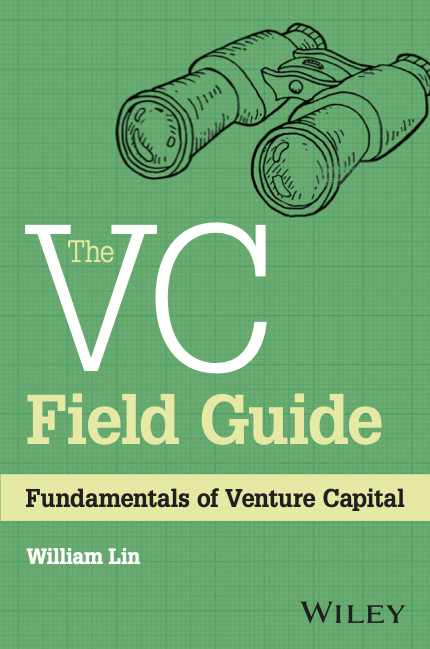
A practical handbook for how venture capital actually works.
How a VC deal gets evaluated and done, start to finish.
What successful investors ask founders, and why those questions matter.
How the best venture investors actually think.
How to begin a career in venture, and how to build it.
Key differences between firm types and what they mean for founders.
The different factors VCs use to evaluate companies at each stage.
A decade in venture — from an entry-level seat to Managing Director.
William Lin was a co-founder of Forgepoint Capital, a venture firm investing in cybersecurity, AI, and infrastructure software, where he became Managing Director. He spent that decade on three questions: which markets are ready, which teams win, and how a company gets to market. He is now the founder of AKA Security, an AI-native security company. In The VC Field Guide, he turns that framework into something any investor, founder, or operator can use.
From the investors, allocators, and educators who do the work.
4.4 from 11 ratings on AmazonI hear this question from LPs, entrepreneurs, and MBAs all the time: "How do you decide on the valuation of a startup when there is no historical data to go by?" The Venture Capital Investment Framework (VCIF), anchored on six areas of questioning, is flexible enough to adjust to any industry vertical and provides a solid foundation to anyone thinking about startups.
One of the most important skills in venture capital is asking the right questions. It took me a long time to learn the questions that matter and to ask them in a sophisticated way. The VCIF is a great foundation for any VC to start defining and refining the questions they need to ask to become a successful investor.
I unconsciously used the VCIF when I led the early round in Zoom and others. The Zoom team (who) built a product that worked flawlessly (what) on mobile devices (when and why) and significantly expanded the TAM (where and how). This framework also applies to other aspects of the startup ecosystem, whether you are starting a company or acquiring one.
Understanding how fund partners select portfolio companies can provide critical insights into their ability to generate strong returns. By providing a structured and systematic approach to evaluating startups, William Lin's VCIF is an invaluable tool for allocators when performing fund manager due diligence. It is a must-read for any LP looking to invest in venture capital funds.
I really liked listening to this book to learn so many important things about how VCs make their investments. This was super helpful for me to get their perspective as I seek funding as a first-time founder.
"Highly recommend this book for anyone looking to learn more about VCs or get funding from VCs."
For someone interested in VC, but with 0 understanding of how the VC industry works, this book did an incredible job of what VCs emphasize when they are pitched a company. The way VCs invest is very gate kept, but this book shines great light on the industry. This book explains concepts in a manner that allows anyone to understand it! Also, I read the book in 1 day as well! 10/10 would recommend!
Comprehensive and easy to understand guide to VCs. Must read.
For anyone who wants to fund startups, build one, or understand how the decisions get made.